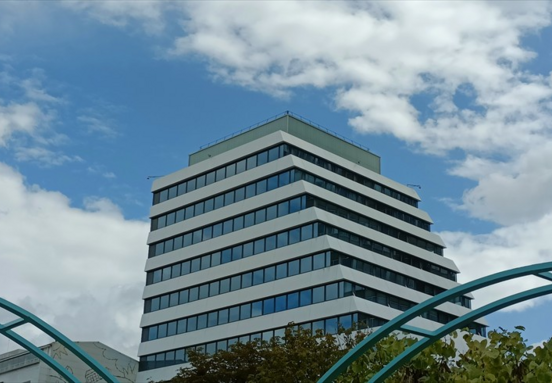
Modernizing for the future: Orange's vision for "New Lannion"
In a substantial move to future-proof its operations, Orange is investing €50 million into the complete renovation and modernization of its Lannion site in France. This ambitious 'New Lannion' project aims to transform a 60-year-old facility into a state-of-the-art hub. The plan includes constructing a new 7,500 m2 building and rehabilitating existing structures, with an overarching goal to make the site more attractive to new generations of engineers, foster greater collaboration, and achieve carbon neutrality by 2040. This significant investment underscores Orange's commitment to creating comfortable, modular spaces designed to encourage interaction and innovation.
As part of this redevelopment, the overall footprint of the Orange site will dramatically reduce from 44,000 m2 to a more streamlined 12,000 m2. The Legendre Group, acting as promoter and constructor, has acquired the older, disused buildings for decommissioning. This strategic reduction in heated surface area also directly contributes to Orange's sustainability targets, highlighting a growing trend among businesses to optimize their real estate for both environmental and operational efficiency.
Embracing agile work environments: open plan and flex-office
Central to Orange's modernization strategy for 'New Lannion' is the adoption of open-plan offices and a 'flex-office' model. These contemporary workspace designs prioritize fluidity, collaboration, and resource optimization. For businesses considering new office spaces, open-plan layouts are often championed for their ability to break down hierarchical barriers, enhance communication, and foster a dynamic work environment. The flex-office concept, where employees do not have assigned desks but rather utilize available workstations as needed, aims to maximize space utilization, especially for teams with varying daily attendance or those incorporating hybrid work models.
While offering potential benefits in terms of cost savings, flexibility, and promoting spontaneous interaction, these models also present unique challenges that companies must carefully consider during their planning phases.
Balancing efficiency with employee needs: the union's perspective
Despite the forward-thinking nature of Orange's 'New Lannion' project, the proposed design has raised significant concerns among employee unions. A primary criticism revolves around the core principle of the flex-office model: the site is planned to have fewer available workstations than employees. Unions argue that for the Lannion site, where employees often perform specific tasks that necessitate their physical presence, extensive remote work is less feasible than elsewhere. This leads to a critical worry: employees arriving for work in the morning may not be guaranteed a place to sit and perform their duties.
Union representatives describe Lannion as "the Innovation real estate project with the lowest number of m2 per workstation," highlighting a potential over-optimization that could impact employee comfort and productivity. Furthermore, there's a tangible fear that the shift to these highly flexible, space-efficient layouts could lead to a loss in the site's social life, undermining the very collaboration Orange aims to foster. This perspective offers a vital counterpoint for businesses, emphasizing the importance of understanding specific workforce needs and cultural implications when designing modern office environments.
Key considerations for businesses planning office space
The Orange Lannion project serves as a compelling case study for any business contemplating new office or warehouse space. When designing or renovating your facilities, consider these crucial points:
Understanding your workforce: Before implementing flexible desk policies, assess your team's specific job functions, remote work capabilities, and daily presence requirements. What works for one company or department may not suit another.
Balancing efficiency and employee well-being: While optimizing square footage can reduce costs, it's vital not to compromise employee comfort, access to resources, and a sense of belonging. An uncomfortable workforce can lead to reduced productivity and morale.
Fostering culture and collaboration: Ensure your design genuinely supports social interaction and teamwork without sacrificing spaces for focused work or quiet contemplation. Thoughtful layout can enhance, rather than detract from, company culture.
Sustainability integration: Like Orange, look for opportunities to reduce your environmental footprint through efficient space utilization, energy-saving designs, and sustainable materials.
Future-proofing: Design spaces that are truly modular and adaptable to evolving business needs and work styles, allowing for easy reconfigurations as your company grows or shifts strategies.
By carefully weighing the benefits of modern office trends against the practical needs and concerns of your employees, businesses can create spaces that are both economically viable and genuinely supportive of their workforce.
Source: actu.fr